What people say about Tales of Khayr

"Riveting Fantasy and Vivid Drama: A Masterful Saga That’s 'Easy to Pick Up and Hard to Put Down'."
"Constantinople Comes Alive in This Multifaceted Tale of Power, Love, and Sacrifice"
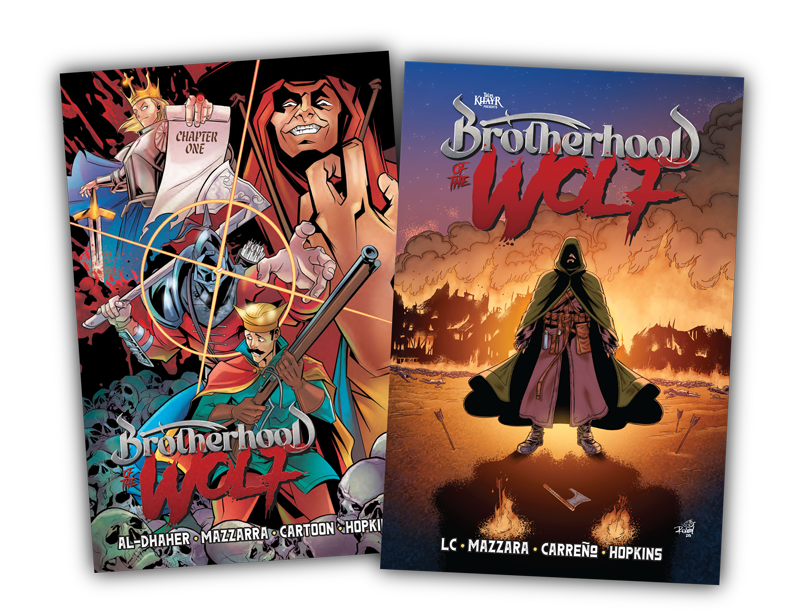
Brotherhood of the Wolf: The Lesser Evil by Ezra LC and Wes Al-Dhaher is a graphic fantasy novel combining prose storytelling with silent comic art. Set in Constantinople, where a powerful Christian ideology reigns, it envisions the restoration of the Ottoman kingdom over the Balkans. This commanding introduction promises riveting, multifaceted reading with diverse characters and format.
Nikephoros grows into his powers and political destiny in the 15th century, navigating fear, pain, and a vanished fellow adventurer in an inky black darkness where ancient carvings portend danger. The fantasy, horror, and historical backdrop attract readers of these genres.
Half the story is in prose, half in black-and-white graphic art by Aurelio Mazzarra, encouraging readers to think about evolving events. With its alluring premise and unexpected situations, Brotherhood of the Wolf: The Lesser Evil is easy to pick up and hard to put down—a winner for graphic novel readers.
D. Donovan,
Senior Reviewer,
Midwest Book Review
"A Dark and Compelling Tale of Political Intrigue, Familial Secrets, and Supernatural Forces."
Brotherhood of the Wolf: The Lesser Evil is a dark and compelling tale of political intrigue, familial secrets, and supernatural forces. Nikephoros, a young noble of Constantinople, navigates a city on the brink of chaos, confronting sinister undercurrents that blur the line between protection and malevolence. Through shadowed tunnels, whispered conspiracies, and a chilling supernatural twist, the book captivates and unsettles.
Ezra LC and Wes Al-Dhaher craft an enthralling atmosphere. Constantinople comes alive with bustling streets, fragrant markets, and lingering history. Nikephoros’s harrowing encounter in the tunnels is spine-tingling. Polychronia is a standout—her layered role as a loving mother harboring dark secrets is masterfully portrayed. The eerie descriptions of the “tall, slender figure” and unsettling rituals kept me hooked.
A thrilling read that blends historical realism with supernatural horror, Brotherhood of the Wolf: The Lesser Evil is an unforgettable tale of protection, love, and justified evils.
Rating: 4 Stars
Ellie Pulliam,
Writer,
Literary Titan
"A Brilliant Fusion of Political Intrigue, Dark Secrets, and Eerie Atmospheric Tension."
Brotherhood of the Wolf: The Lesser Evil is a dark and mesmerizing blend of historical fiction, political intrigue, and supernatural horror. Set in 15th-century Constantinople, it explores the thin line between faith and fear, nobility and corruption, heroism and horror.
Nikephoros, a young noble, is drawn into a shadowy underworld where enemies may not only be foreign invaders but inhuman horrors lurking beneath the streets. A reckless friendship leads to a hidden chamber, eerie symbols, and an unseen force that devours his friend. Meanwhile, his mother, Polychronia, shifts between loving caregiver and ominous figure, embodying themes of moral compromise and hidden truths.
The horror elements, including a shadowy creature and the realization that his family may be linked to the horrors beneath Constantinople, add psychological depth. A brilliant fusion of historical fiction and supernatural horror, Brotherhood of the Wolf is immersive, chilling, and hard to put down.
5*- Brilliant Fusion
Amanda Caswell,
Reviewer,
Reader Views
www.readerviews.com
"A Tale of Vivid Action, Heroes, and Gruesome Monsters."
Brotherhood of the Wolf: The Lesser Evil offers vivid action, heroes, and gruesome monsters. The novel presents storytelling in dual forms: prose set in 15th-century Constantinople and a graphic novel.
Nikephoros, a 14-year-old hoping to achieve the rank of “archon,” follows his friend Adam into a tunnel hidden at the end of an alley. What they find defies explanation. Rumors of monsters seem to find credence as Adam disappears in the dark. Nikephoros escapes but faces questions and fears. His investigations lead to his own mother, Polychronia, forcing him to confront supernatural phenomena tied to his family.
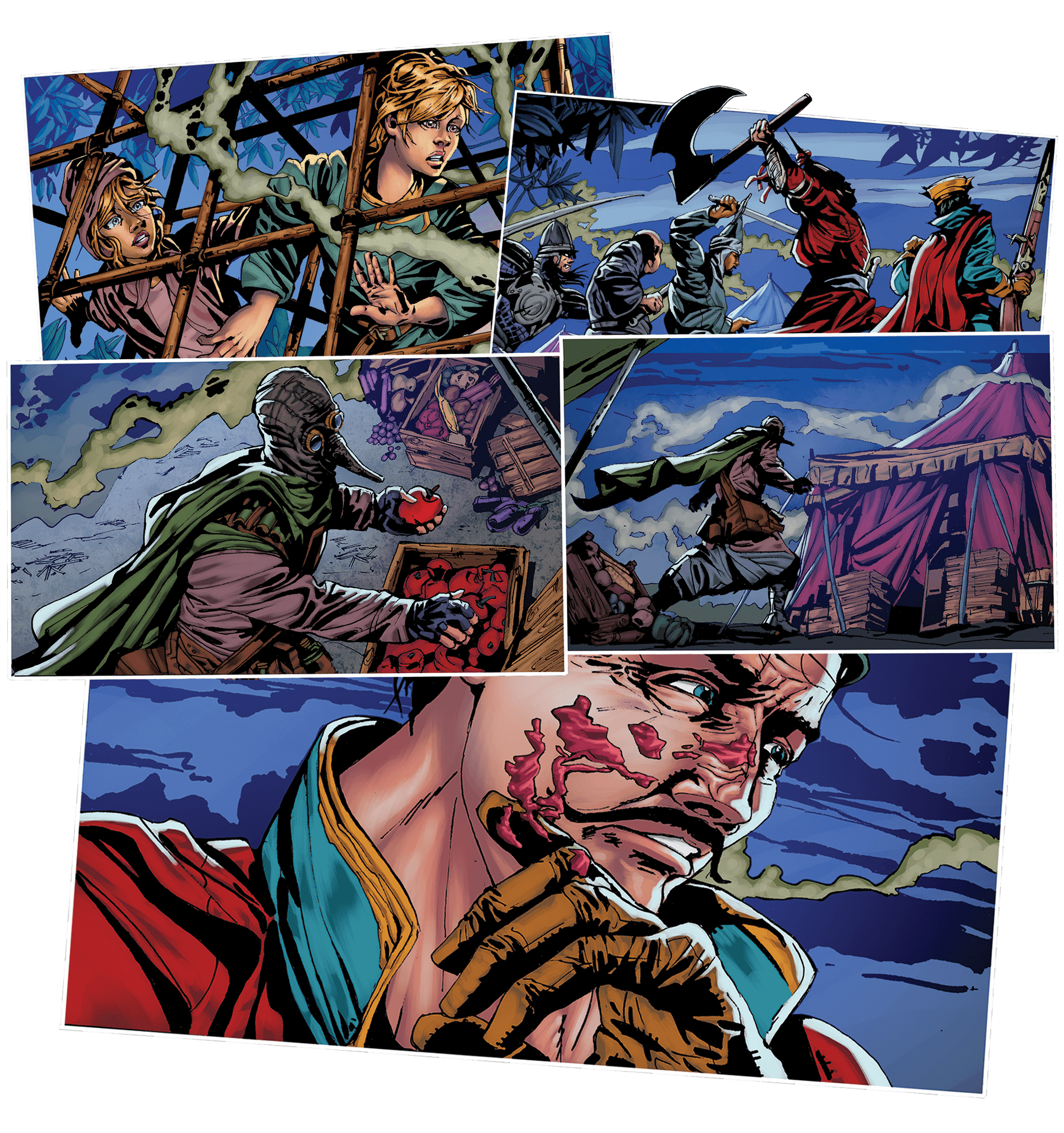
The black-and-white artwork is beautifully rendered, with gladiatorial combat that leaps off the page. The difficulty is in connecting the two portions. While this installment offers much promise in terms of storytelling and artwork, it lacks the cohesion to make the work fully satisfying as a whole.
BlueInk Review,
www.blueinkreview.com
"Monsters, Gladiators, and a Haunting Nightmare Come to Life."
In a turbulent 15th-century Constantinople, Nikephoros, a young noble, has terrifying encounters with the city’s shadowy elite. The Byzantine Empire’s independence is “hanging from a thread,” while a secret group, The City of the Angel, seeks “to ensure Christian dominance… at any cost.” Rumors swirl of “people being sucked into the earth,” and Nikephoros’ nightmares of a “slender, too-tall figure” become reality when he follows his friend Adam into a hidden tunnel, leading to tragedy. Suspecting his mother, Polychronia, of involvement, Nikephoros soon finds himself forced into gladiatorial combat for the sinister Fausta.
Mazzarra’s grayscale illustrations add “layers of visceral emotion,” depicting haunting imagery, but the lack of captions risks losing some of the story’s intricacies. Despite this, the novella “clearly values the storytelling power of words and images equally,” creating “an offbeat and often compelling pairing of plot and illustration.”
Kirkus Review,
www.kirkusreviews.com
"Dark Tunnels, Malevolent Forces, and a City Shattered by Horror."
The horror novella Brotherhood of the Wolf glimpses into a world of concealed, ancient dangers. In fifteenth-century Constantinople, Nikephoros lives a life of relative ease. His only struggle is the overbearing nature of his mother, Polychronia. Nikephoros’s perceptions of his home and the people in it are shattered when he encounters a mysterious, sinister entity in the tunnels beneath the city.
In its second half, the book switches to a wordless comic format. He battles a mutated woman for the entertainment of a monstrous crowd. The prose is unflinching and direct. Vivid locations—including dark, winding subterranean tunnels and bustling marketplaces—flesh the book’s world out further.
The illustrations are striking, but the lack of text deprives the comic of a clear, traceable narrative. Still, Brotherhood of the Wolf is an ambitious horror novella in which a mother and son face a strange, malevolent entity, learning that evil is often nearer than it seems.
James Edward Cook,
Forewood Reviews
"Gladiatorial Combat, Vampires, and Ghouls"—A Horror Story to Marvel and Wince Over"
In fifteenth-century Constantinople, teenager Nikephoros dreams of joining the military and becoming an archon. His mother, Polychronia, supports his ambitions but disapproves of his mischievous friend Adam. When Adam leads Nikephoros into a hidden underground tunnel, everything goes wrong. Later, only one teen emerges, injured and in shock, while whispers of people "sucked into the earth" and "bodies drained entirely of blood" linger.
The novella takes a unique turn, shifting from strong prose to wordless, rapid-fire illustrations. While Mazzarra's artwork depicting gladiatorial combat attended by vampires and ghouls is striking, the transition from text to imagery feels abrupt—almost like two different stories stitched together. Despite this, readers seeking an ephemeral horror tale will find plenty to marvel at and wince over. Brotherhood of The Wolf: The Lesser Evil delivers eerie suspense but struggles with its experimental structure
Ben Haskett,
Seattle Book Review
"A Unique Graphic Novella Unlike Any Other on the Market"
Young lord Nikephoros lives a pampered life in Constantinople, training to be an archon, while his commoner friend Adam is free from such burdens. When Adam persuades him to explore the rumored underground tunnels, their lives are changed forever. The historical details make the setting feel authentic, with a shadowy group ensuring Christian dominance and rumors of people vanishing into the earth.
Nikephoros’ mother, Polychronia, is shrouded in mystery—harboring secrets and lying about her ties to the enigmatic Fausta. Her actions prove she isn’t to be trusted. The story takes a unique approach, presenting the first half as a written narrative before shifting to stark black-and-white illustrations by Aurelio Mazzara, guiding readers through the wordless conclusion.
Brotherhood of the Wolf: The Lesser Evil is a fresh take on the graphic novella, offering multi-layered characters, richly detailed illustrations, and a unique storytelling format that stands apart.
Diana Coyle,
Feathered Quill Reviews
www.featheredquill.com/brotherhood-of-the-wolf/
"Enticing and Mysterious with Amazing Suspense — A Cliffhanger That Left Me Wanting More"
From first glance I loved the Before you Begin letter, the quality of print and colors of everything was enticing and mysterious. I started reading the story and when they got into the underground tunnel - oh my gosh. I could feel the room, the fear, the playful Adam landing some friendly insults. I felt the fear of the light going out. I even contemplated putting it down but couldn't. It was amazing and had such a build of suspense. The way it ended left so much mystery and unanswered questions that the cliff hanger left me wanting more. The artwork, glossy paper, all of it was amazing.
Christina aka Maia Skye Reika,
Seeking The Light Of A Thousand Suns
www.seekingthelightof1000suns.com
"A Unique Graphic Novella Unlike Any Other on the Market"
I’ve never really been into graphic novels—mostly because I find it hard to get invested when a story dives in without grounding the reader. But this series takes a different approach. It begins with prose and transitions into a silent comic format.
That combination worked surprisingly well!
The prose section is especially impressive—so much so that it earned the rare unanimous approval of myself, my son, and my teenage daughter. “The writing is fantastic,” she remarked.
We were a bit uncertain about the silent comic section at first, but the story remained coherent, and the artwork itself is top-notch.
Do give Wes a follow and support his series. We desperately need Muslim creatives producing content that’s rich in meaning and free from the filth saturating much of mainstream entertainment. I won’t disclose too much about the plot but it makes for an interesting reading just from a purely literary perspective.
I don’t know what to compare it to in the comic scene as I have never read a book in that genre. Waiting for the rest of the series.
Anwar Mangal,
Co-host with Hasan Spiker of the "Hasan Spiker and Two Mullas" podcast
https://www.youtube.com/@hasanspikerandtwomullas/
www.x.com/movetomuscat
www.movetomuscat.com
The first two issues are already available..
Order NowIf you want to learn more about the unique people, places, and world of the Brotherhood of the Wolf, read on.